
LEIBNIZ UNIVERSITY HANNOVER
ABOUT US
Leibniz University Hannover is one of Germany's leading technical universities, located in the city of Hannover. Named after the polymath Gottfried Wilhelm Leibniz, it offers a broad range of study programmes with key research areas including energy research, optical technologies and interdisciplinary science studies. More than 27,000 students benefit from its international and interdisciplinary approach. The university promotes sustainability through its Green Office, which acts as a project partner and a driver of change.
Our website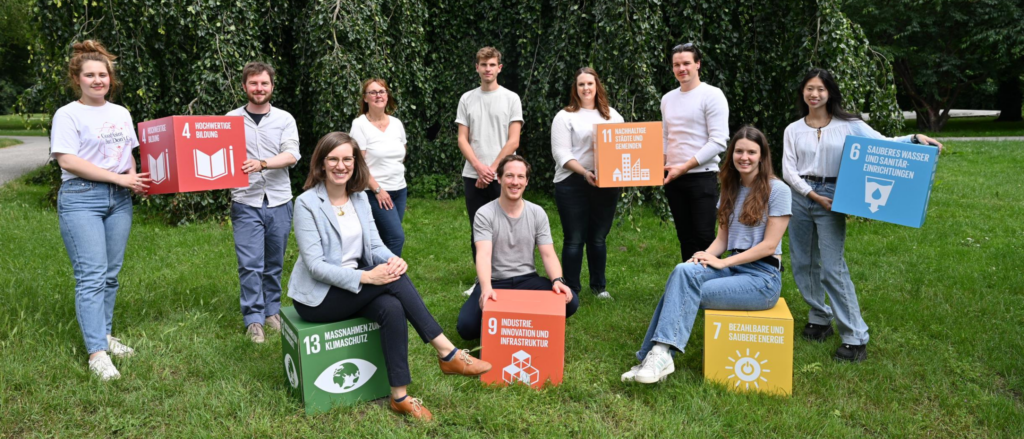
OUR ACTIVITIES WITHIN THE CONSORTIUM
WP2: Innovation Ecosystem
T2.1 Identifying transformation demand and its dynamics
T2.4 Smart approaches to effective spatial governance
WP4: Smart Tools
T4.2 Developing a resilience-oriented innovation system
WP6: Living Lab Sites
T6.4 Innovation ecosystem
T6.5 Green campuses – pilot co-lead
Supporting sustainability (WP1, WP2, WP7) and excellence
BENEFITS OF OUR OUTPUTS AND TARGET GROUPS
The project output is intended for a wide range of stakeholders, including universities, research institutions, policymakers, local authorities and businesses. It aims to provide practical knowledge, tools and strategies to support sustainable transformation, foster innovation and strengthen cross-border cooperation between academia, industry and society.

Dr. Stephanie Mittrach
Sustainability Spokesperson / Head of the Green Office
What do you expect from the STICS project?
I expect STICS to support sustainable change through cross-sector collaboration and smart technologies. I look forward to exchanging ideas that will advance green innovation, regional resilience and the sustainable transformation of education, industry and society in Slovakia and beyond.
Who will be able to use your outputs, and when?
The project output is intended for a wide range of stakeholders, including universities, research institutions, policymakers, local authorities and businesses. It aims to provide practical knowledge, tools and strategies to support sustainable transformation, drive innovation and strengthen cross-border cooperation between academia, industry and society.