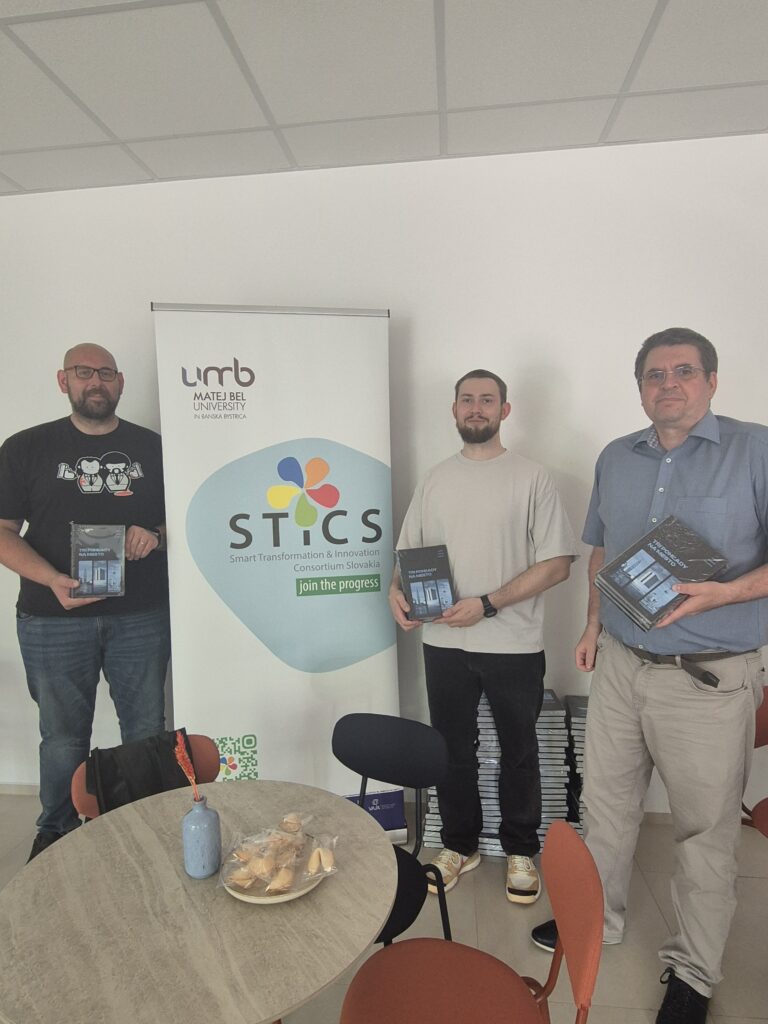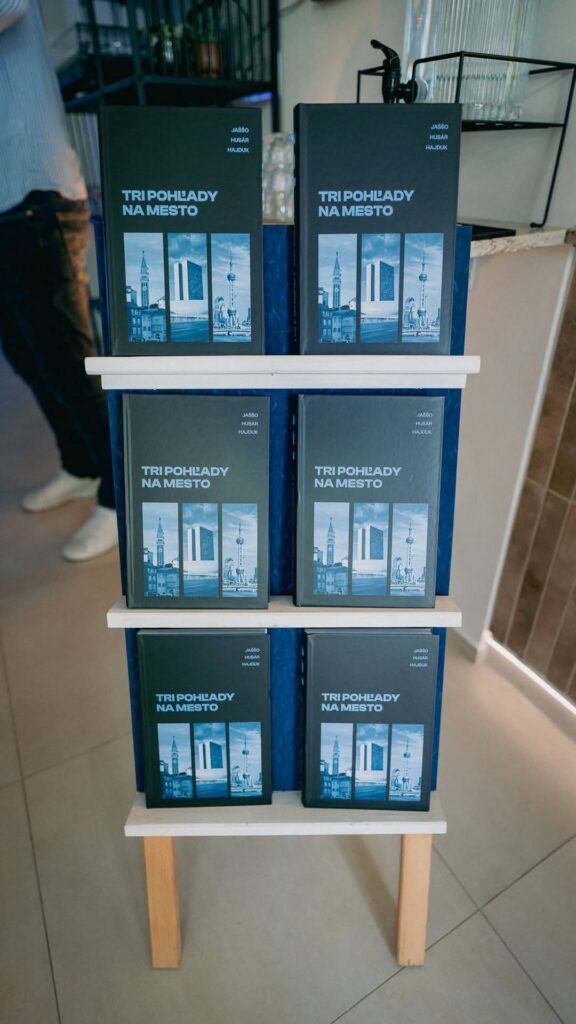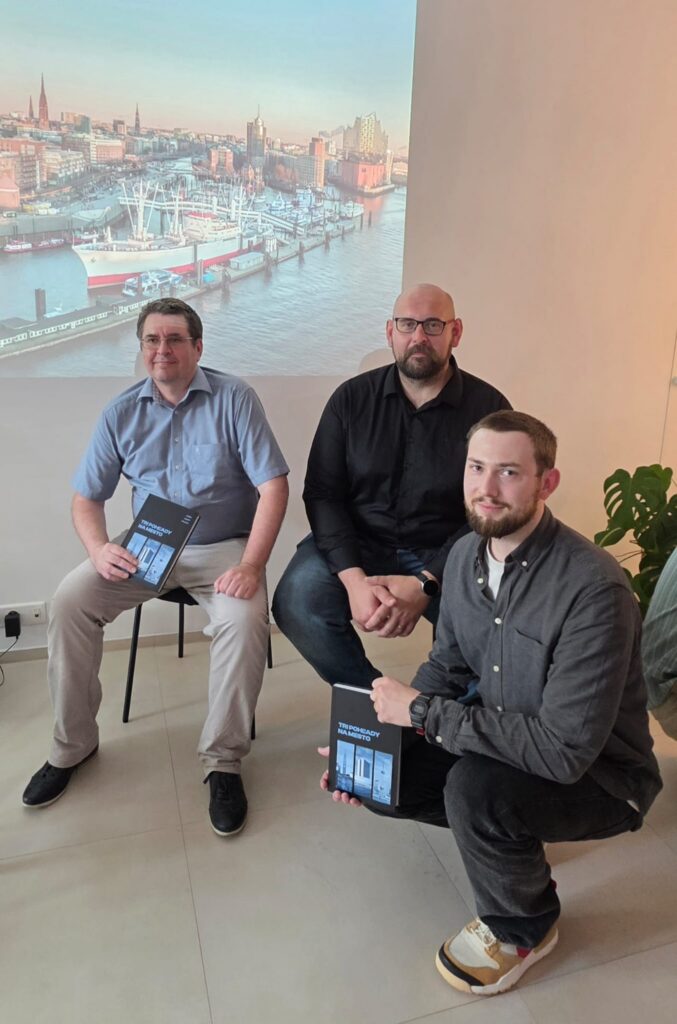

Thursday, 18th June 2026 was the long expected day of the launch of the book „Three views on the city“, held in the cultural centre BOD in Hraničná street, Bratislava. The publication Three Views on the City is an authorial “trilogy on the city”, which offers an interdisciplinary view of the phenomenon of urbanity from the perspective of an architect, spatial planner and psychologist. The book by authors Matej Jaššo (FM UK/ STU), Milan Husár (FM UK/ STU) and Michal Hajduk (FAD STU graduate) explores the city as a complex social, spatial and cultural system – as a living organism and a symbolic text that says more about society than any other form of cultural production. The publication is conceived as a trilogy: thematic, authorial and application. The authors trace the genesis of urbanity, its historical layers and current transformations.
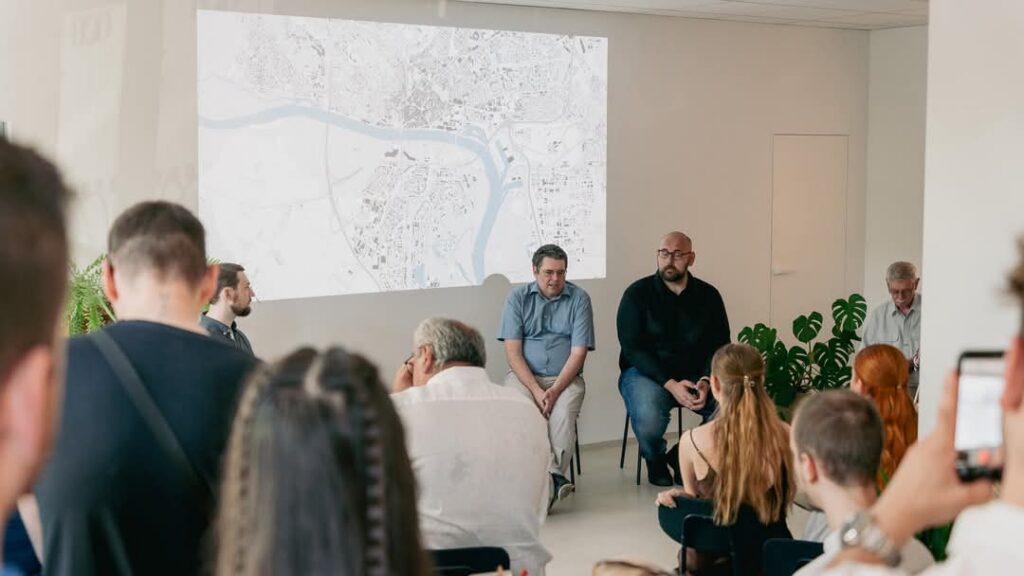
On June 18, 2026, the launch of the book *Tri pohľady na mesto* (“Three Perspectives on the City”)—authored by Michal Hajduk, Milan Husár, and Matej Jaššo—took place at the BOD cultural center at Hraničná 38 in Bratislava. Published by Salónik s.r.o. with the support of the STICS project, the book offers a unique perspective on the city and its urban character. It presents an unconventional journey through urbanism, architecture, history, and the psychology of urban life.
The book is not a standard textbook on urbanism; it is simultaneously a philosophical essay, a cultural guide, and a reflection on how cities shape our relationships, values, identities, and visions of the future. It reads like a map of cities, but also like a map of the society in which we live. The launch event featured a panel discussion with the authors regarding the book and the specific cities it covers. The event attracted significant interest, drawing attendees primarily from the academic community and the professional public. The book “Three Perspectives on the City” attempts to present the central theme of urbanity to readers in the form of a trilogy: a trilogy of authorship, a trilogy of themes, and a trilogy of application.
The city is perhaps the most complex social system humanity has ever created, serving as a backdrop that remains with us throughout our lives. It is a text we read daily and, simultaneously, the environment where most of our professional and private activities unfold. The experience of the urban environment—and the unique emotions that urban space can evoke and sustain—constitute irreplaceable moments in any person’s life. The city socializes, inspires, and fosters our growth, yet it can also disappoint or betray us. It is our constant companion on life’s journey. Indeed, we can remember even just a few hours spent in a foreign city for the rest of our lives; conversely, we may never fully unravel every secret of our hometown, even after living there for forty years…
Our undertaking is, first and foremost, an epistemological trilogy concerning the city and urbanity as its fundamental characteristic. We trace its genesis—where, how, and why it emerges—as well as the factors that decisively shape its final form and the ways it has been interpreted both past and present. Urbanity is not merely a unique attribute of the urban environment—its capacity to facilitate communication and social bonds—but also a reflection of history and the past, of present and past power dynamics, political hegemonies, and conflicts, as well as of our own conceptions of justice, equality, democracy, and other values we project onto it. It is a collective creation, the product of a specific compromise amidst competing forces of influence. It changes daily, yet sometimes these changes go unnoticed. It often serves as an early warning sign that society is not moving in a positive direction. The city is a complex symbolic text that will likely reveal more about us to future generations than any literature, music, or other art form. Urbanity is, above all, a creative and unique expression of the city.
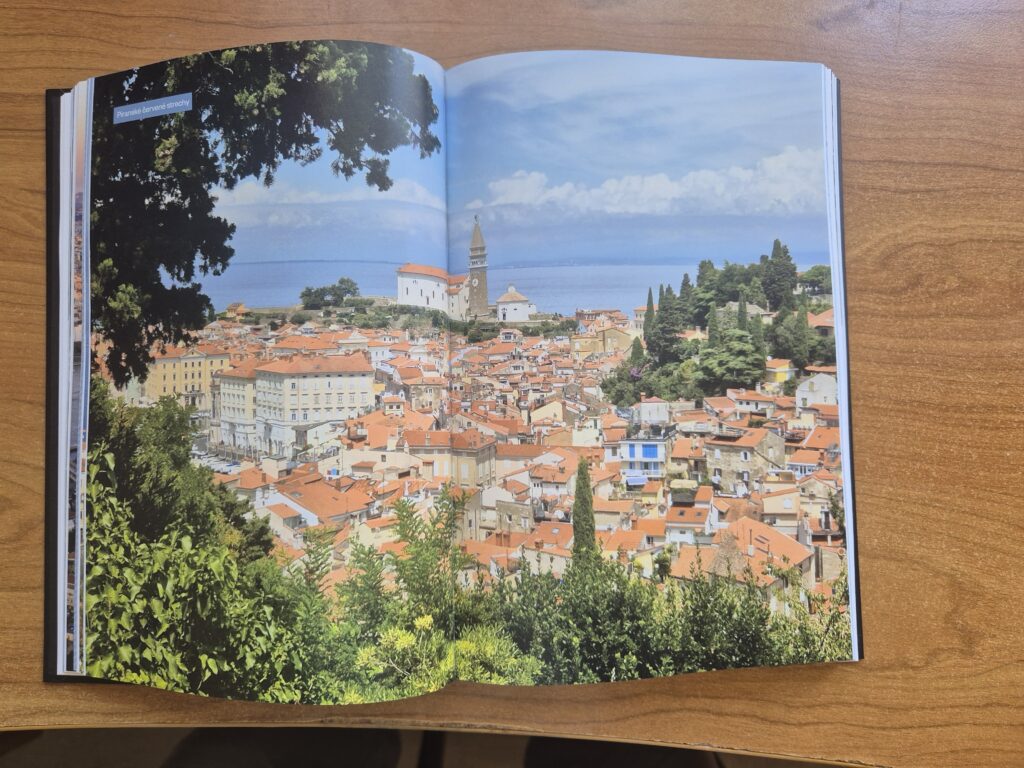
Our trilogy continues by presenting three distinct forms of the city. We turn our attention to the historic city—the product of the gradual layering of influences, unique artistic endeavors, and the practical solutions of the past. The dual horizon of religion and sovereign power—the sole timeless authorities in traditional society—is the factor that perhaps most profoundly shaped the character of our historic cities. Yet, the beauty of Piran, Český Krumlov, and Istanbul lies not merely in the heritage of grand Christian or Ottoman narratives; it is also a tribute to the anonymous, everyday interventions of ordinary people who helped shape the whole. It represents a unity of vernacular and “high” architecture, existing without the constraints of modern regulations or building codes.
The modern city is the legacy of the 20th century—an era defined by humanity’s greatest project of emancipation, with all its attendant triumphs and catastrophes. The story of Brasília—a city rising from the endless cerrado—unfolds like a lifelong, recurring dream. Its Plano Piloto serves as a simple reflection of Cabral’s Cross—the sole link to a distant homeland—planted in a landscape devoid of memory, roots, or continuity. All of this is articulated through the brilliant architectural language of Costa and Niemeyer. Next comes New Belgrade—Tito’s grand dream, seemingly born of another space-time; it stands as a chronicle of the Third Way, a vibrant, psychedelic blend of socialism and capitalism. It hails from an era when utopia was primarily a matter of art and politics, rather than the technological and informational realm it occupies today. All that remains are the hallucinatory remnants of the old world and the abandoned offices of Genex Tower—that “hitchhiker from hell” on the outskirts of Belgrade. And then there is our Petržalka—a monstrous attempt to build a second Bratislava on the right bank of the Danube; yet, rather than collapsing in on itself, it offers us a surprisingly rich, multidimensional present. And sometimes, we learn more about ourselves there than in the glitzy city center.
We live in times when the patina of the past has settled over great modernist projects, and the sight of geometric, functionalist housing estates and structures evokes feelings of nostalgia and sentimentality in many. Hyper-modern cities are emerging—cities that stand in stark contrast to the Athens Charter; cities composed of “flows and networks” rather than “places”; cities where everything intertwines and shifts; cities where virtual space serves as the fourth dimension of the physical realm. Hamburg—a hub of cutting-edge technologies and practices, steered for years by our compatriot Peter Gero in his role as chief architect—exemplifies this new urbanity. So too do Dubai, a city acting as a generic illusion projected onto the global stage, and Shanghai, an ambitious attempt to harness massive economic expansion and a vast sea of millions of people into a sustainable smart city (albeit still grappling with the growing pains, disappointments, and misunderstandings inherent in such an undertaking).
Creating this book was, for us, a personal and creative trilogy. The perspectives of an architect, a spatial planner, and a psychologist converged in our endless debates—whether in Hamburg’s harbor pubs, during driving through the canyons of wild Bosnia, or during rainy winter afternoons in our cramped offices. We would now like to share this formative experience with you.