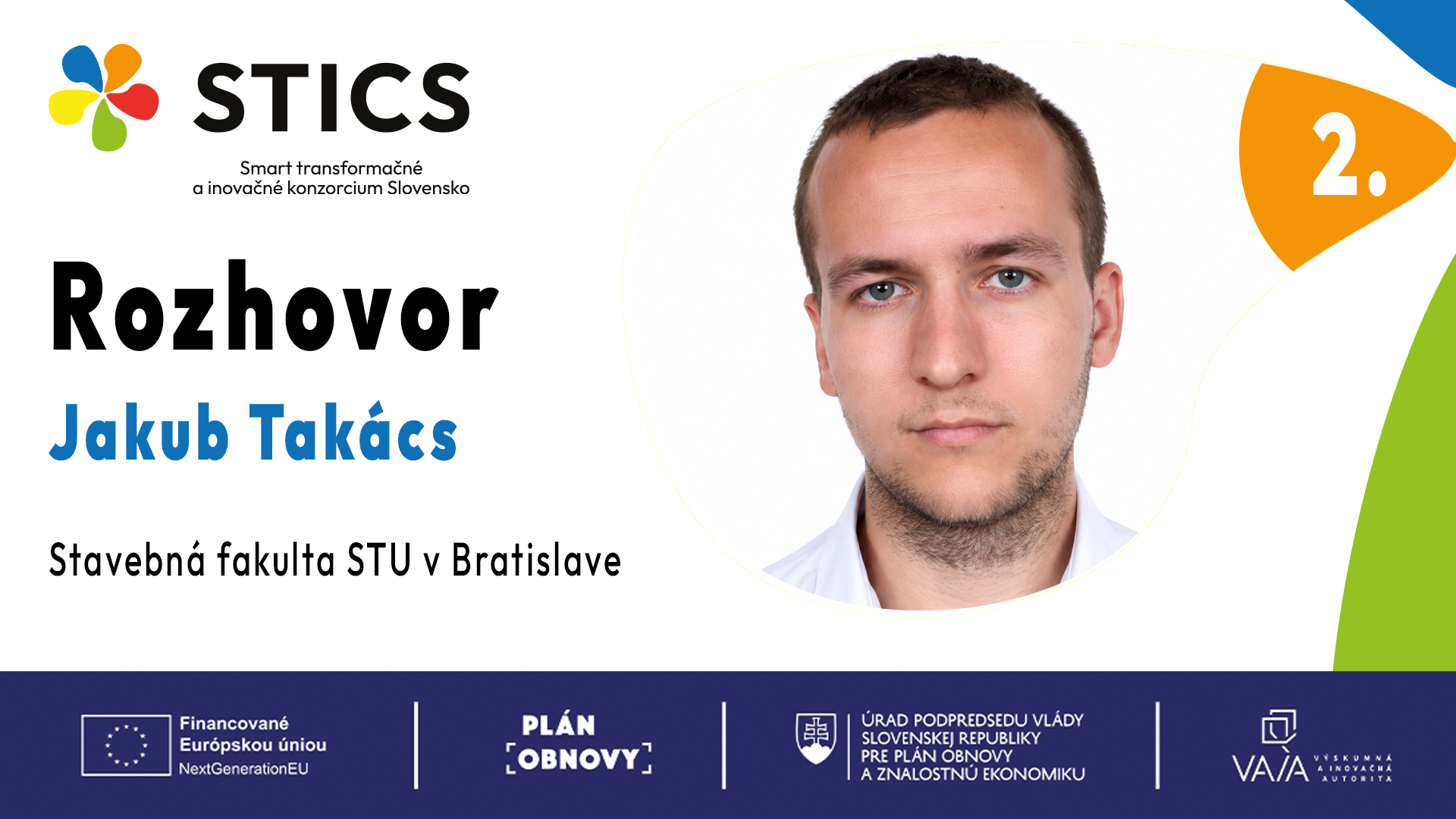
Jakub Takács is an expert at the Faculty of Civil Engineering of the Slovak University of Technology in Bratislava.
What is your role in the consortium, and what does your organisation specifically bring to the STICS project?
Analysis, data processing, and the design of measures and objectives for sustainable mobility. Within the consortium, we conduct mobility surveys directly in the field and subsequently evaluate the data obtained. Together with other partners, we work on applying the data in other areas and develop a methodology for data collection and evaluation.
What have you managed to implement, develop or organise by roughly the midpoint of the STICS project – and what are you most proud of?
Preparation of background materials and a methodology for carrying out transport and mobility surveys in the municipality of Horné Srnie, completion of the first part of the surveys, and preparation of materials for the second part of the surveys.
What do you plan to complete and deliver by the end of the project?
We plan to finalise the mobility surveys, then evaluate the collected data and prepare an output visualising the findings. The final document will contain a proposal of measures and objectives through which we will adjust mobility in the area concerned and plan gradual changes in line with the municipality’s real possibilities.
How will these outputs affect the target group, and what innovation do they bring?
Ultimately, the target group consists of all residents, but primarily pupils of the primary school in the municipality. Real changes will only occur after the solutions proposed within the measures for achieving the methodology’s objectives are implemented. By modifying public spaces and creating new transport options for journeys to the primary school, the quality and accessibility of school commuting will improve. Improved public spaces also increase safety, which encourages more frequent use of more sustainable modes of transport such as walking or cycling. Detailed analysis of the area, involving the target group in data collection and the design of measures, and updating the measured data bring innovative approaches to transport planning and the improvement of public spaces.
What has the STICS project brought to your organisation – and to you personally?
The opportunity to apply the latest knowledge in sustainable mobility directly in practice. To test innovative approaches to data collection, working with the target group, and subsequently developing measures and objectives.
What experience have you gained in the project? What would be worth developing further, and what would you do differently next time?
In the future, it will be necessary to apply these principles in larger cities of different types. We should collect feedback and monitor progress towards the objectives.
In your view, what is the greatest added value of the STICS project?
The opportunity to apply knowledge of sustainable mobility directly in the area being addressed.
What should remain and keep working even after the project ends?
The data should continue to be updated at regular annual intervals so that changes in mobility over time can be monitored after specific measures are introduced. It is equally necessary to monitor progress towards the objectives and the implementation of measures. Once the objectives have been achieved, or if the objectives need to be updated, new mobility measures and objectives for the municipality should be developed.