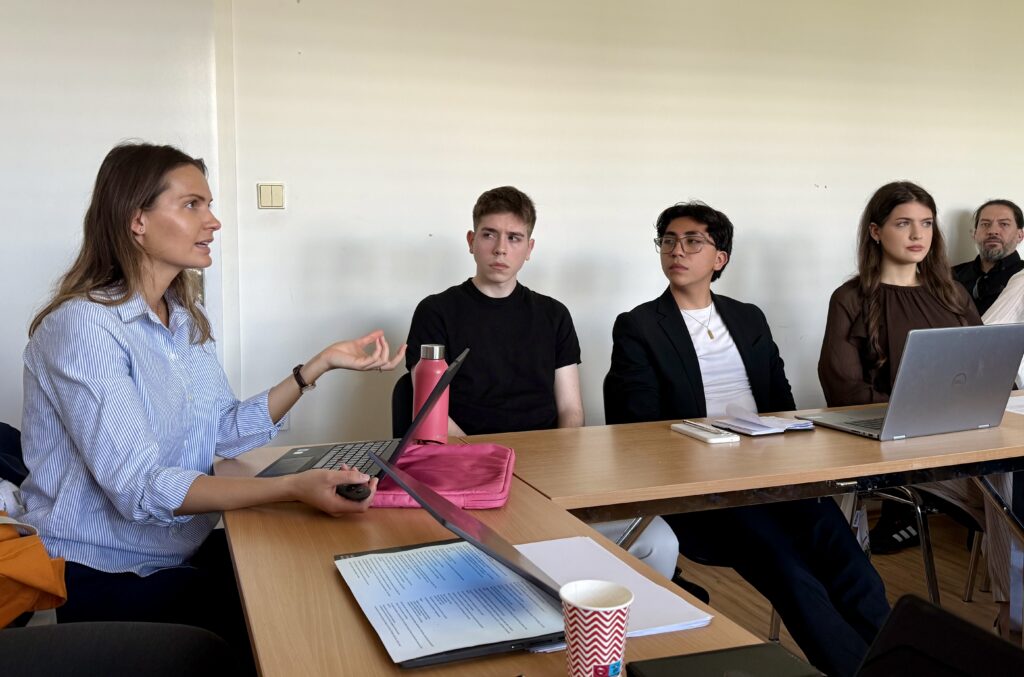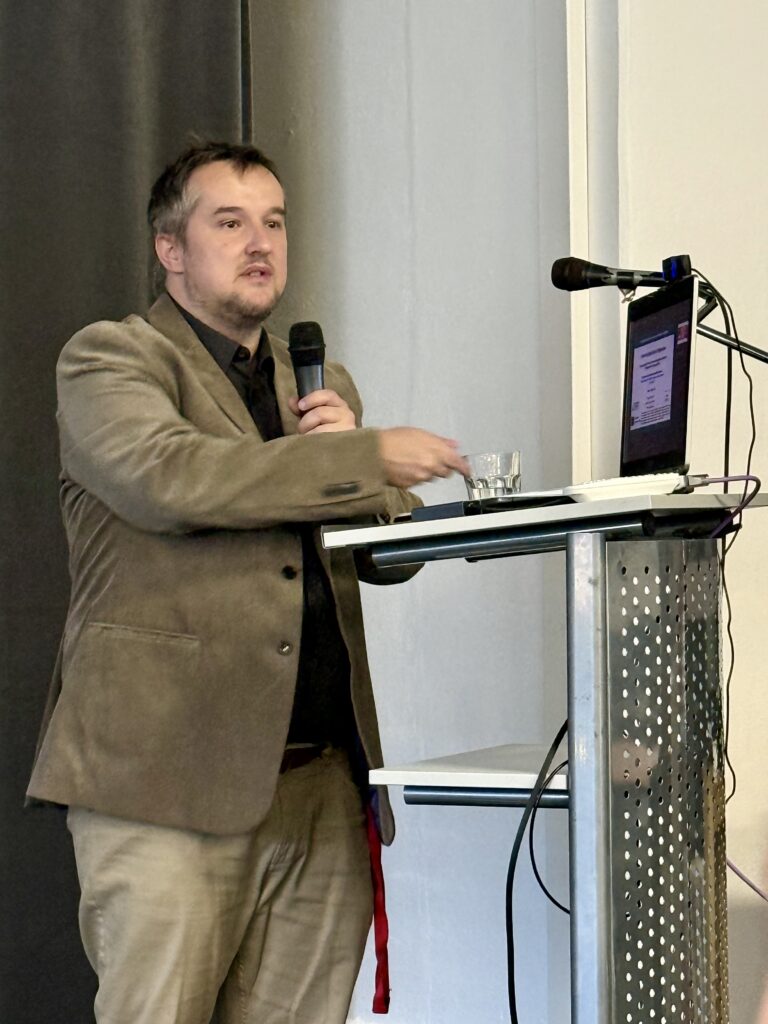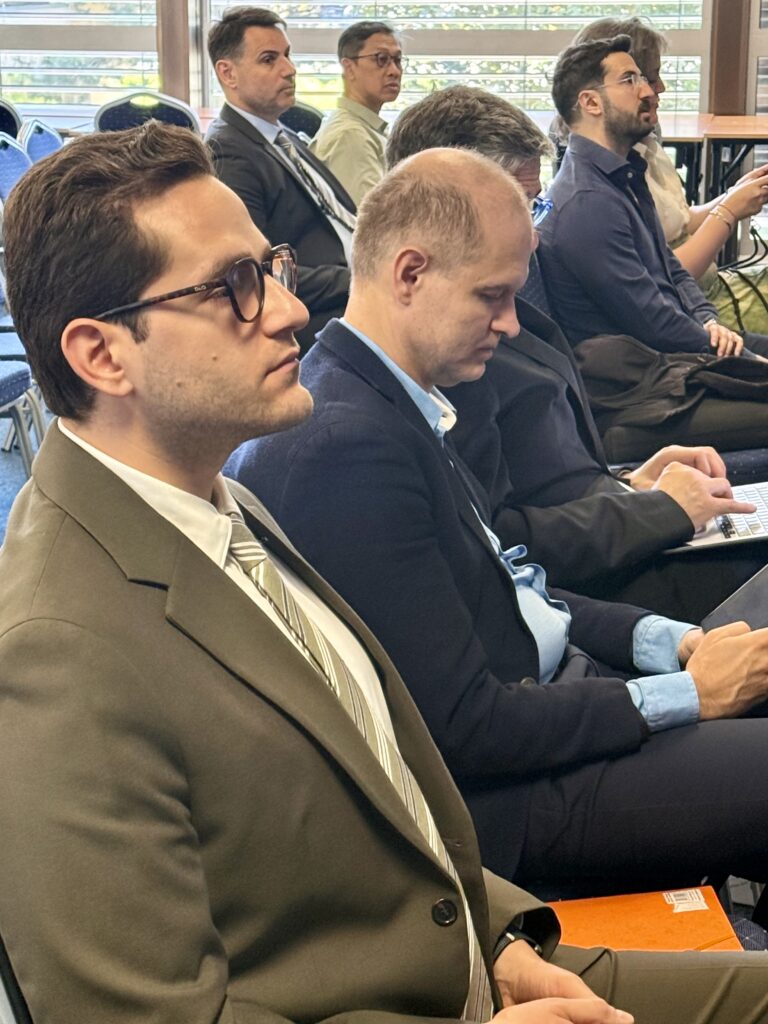
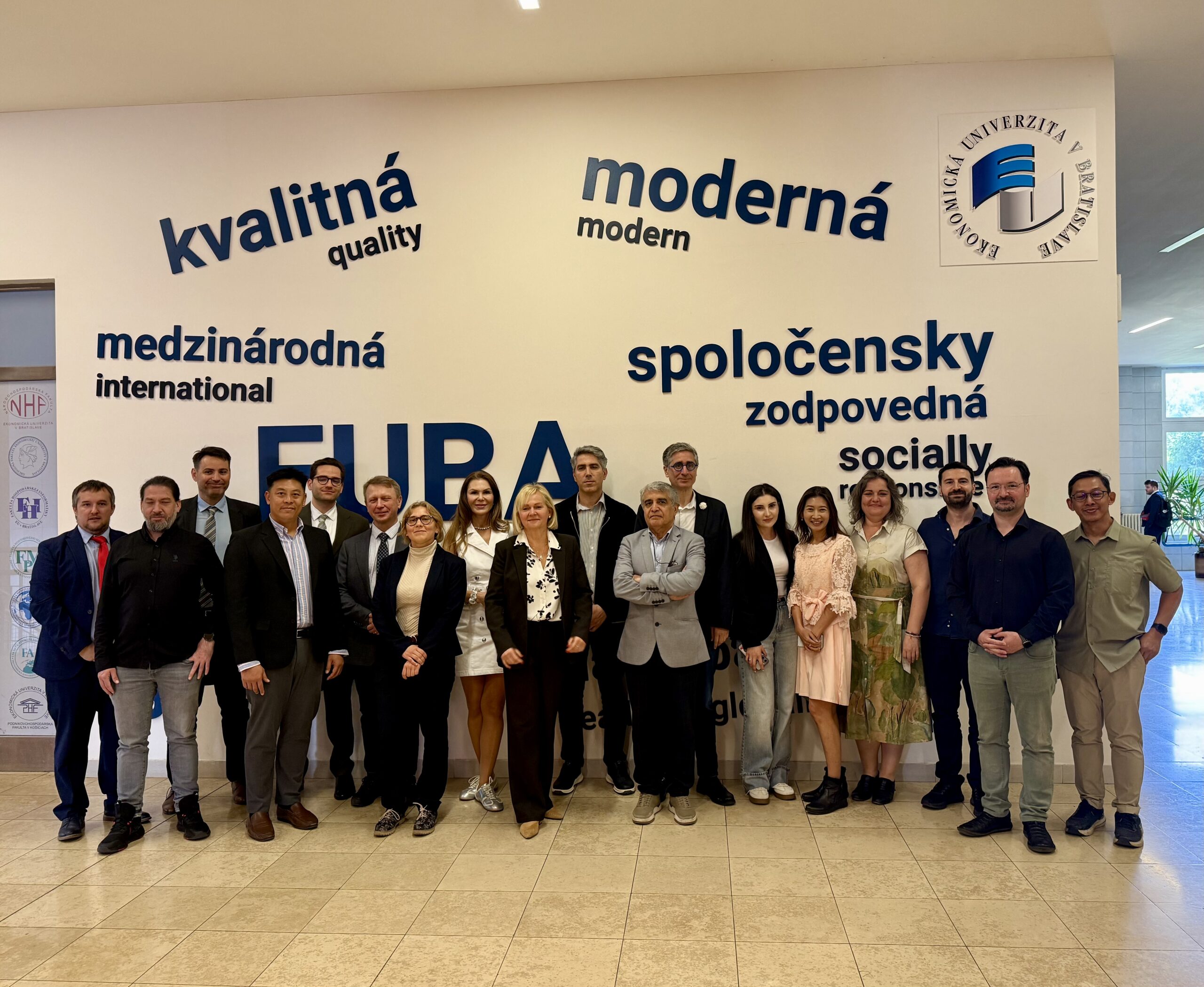
The international conference “Bridging Digital Divides: Skills, Inclusion and Socio-Economic Transformation”, held on 20. 20–21 May 2026 at the Bratislava University of Economics and Business as part of the activities of the STICS project, opened a discussion on how research, data work, and cooperation with practice can support Slovakia’s smart transformation. In the context of the STICS project, the event highlighted the importance of living labs, behavioural insights, and data-driven solutions for municipalities, regions, businesses, and citizens. The conference showed that successful digital and sustainable transformation is not created from behind a desk, but through dialogue with those whom it directly affects.
Since the STICS – Smart Transformation and Innovation Consortium Slovakia project focuses on supporting the smart, inclusive, and sustainable transformation of Slovakia by connecting research, innovation, digital solutions, and cooperation among academia, public administration, businesses, and other actors, the conference created a natural space for discussing topics that are central to the project: digital inclusion, data-driven decision-making, smart governance, regional development, the socio-economic impacts of innovation, and the ability of public institutions to respond to the changing needs of territories.
An important message of the conference was that digital transformation cannot be understood merely as a technological process. If smart solutions are to succeed in practice, they must take into account user needs, the capacities of public institutions, actors’ motivations, levels of trust, organisational barriers, and the specific conditions of cities and regions. This is precisely why the STICS project places emphasis not only on data and technologies, but also on the economic, behavioural, and institutional understanding of transformation processes.
The activities and contribution of EUBA to the implementation of the STICS project were presented at the conference on behalf of the Bratislava University of Economics and Business. Dr. Ľubomír Darmo presented EUBA’s involvement in the project and highlighted the university’s role in connecting analytical work, public policy, and the practical needs of actors involved in transformation processes. Active participants in the conference also included Prof. Anetta Čaplánová, Dr. Hussein Mkiyes, Dr. Andrej Přívara, and Dr. Estera Szakadátová, who are members of the STICS EUBA team.
Special attention was also paid to behavioural research, which represents an important contribution of EUBA to the project. Dr. Estera Szakadátová presented findings from behavioural research at the conference workshop, helping to better understand decision-making, motivations, and barriers to the adoption of smart and sustainable solutions. Such insights are particularly important because even high-quality technical solutions may fail in practice if they do not take into account user behaviour, the organisational environment, and the real needs of target groups.
The conference also supported the living-lab approach, which is one of the important elements of the STICS project. Living labs represent spaces in which solutions are not only designed, but also tested, validated, and co-created in cooperation with municipalities, businesses, users, researchers, and other regional actors. Their importance lies in enabling knowledge from research to be transferred into practice, while at the same time collecting feedback directly from those who will use or implement new solutions.
The discussions during the conference showed that Slovakia’s smart transformation requires the connection of several types of expertise. It is not enough to have high-quality data if they are not translated into clear recommendations and practically usable tools. It is not enough to design technological solutions if they are not acceptable to users and feasible within the conditions of specific institutions. And it is not enough to speak about innovation without linking it to public policies, regional needs, and the ability of actors to cooperate.
This is precisely where the added value of the STICS project lies. The project creates a platform that connects research, data, technologies, public administration, and practice into one functional framework. It enables discussion on how smart and sustainable solutions can not only be professionally designed, but also practically tested, adopted, and used. In this respect, the conference confirmed the importance of an interdisciplinary approach and showed that data-driven transformation has the greatest potential when it is built on cooperation, trust, and an understanding of the real needs of territories.
For the Bratislava University of Economics and Business, the conference was an opportunity to increase the visibility of its expert contribution to the STICS project and, at the same time, to further develop the discussion on how academic research can contribute to the design of public policies and practical solutions. Within the project, EUBA brings expertise in economic and behavioural analysis, policy evaluation, data work, and connecting research with the needs of public administration and regional actors.
The event “Bridging Digital Divides: Skills, Inclusion and Socio-Economic Transformation” thus represented an important step in strengthening the visibility of the STICS project and its key themes. At the same time, it created space for expert discussion, the exchange of experience, and the further development of cooperation among partners and actors involved in the smart, inclusive, and sustainable transformation of Slovakia.
The outputs and insights from the conference will be useful for the further implementation of project activities, the development of living labs, the preparation of analytical and methodological outputs, as well as the formulation of public policy recommendations. Through this event, STICS confirmed its ambition to be more than just a research and innovation project. It is a platform that connects knowledge, partners, and the practical needs of territories with the aim of supporting data-driven and socially acceptable transformation.