
Why does accuracy matter?
Nothing illustrates the absurdity of the current situation better than the statistics on residents’ ages. According to publicly available data, Slovakia should be home to people who passed their 110th birthday long ago. In Prešov the records show two 109-year-old citizens, Žilina has a resident aged 113 on paper, and in Kežmarok the databases list two people who would be 114.
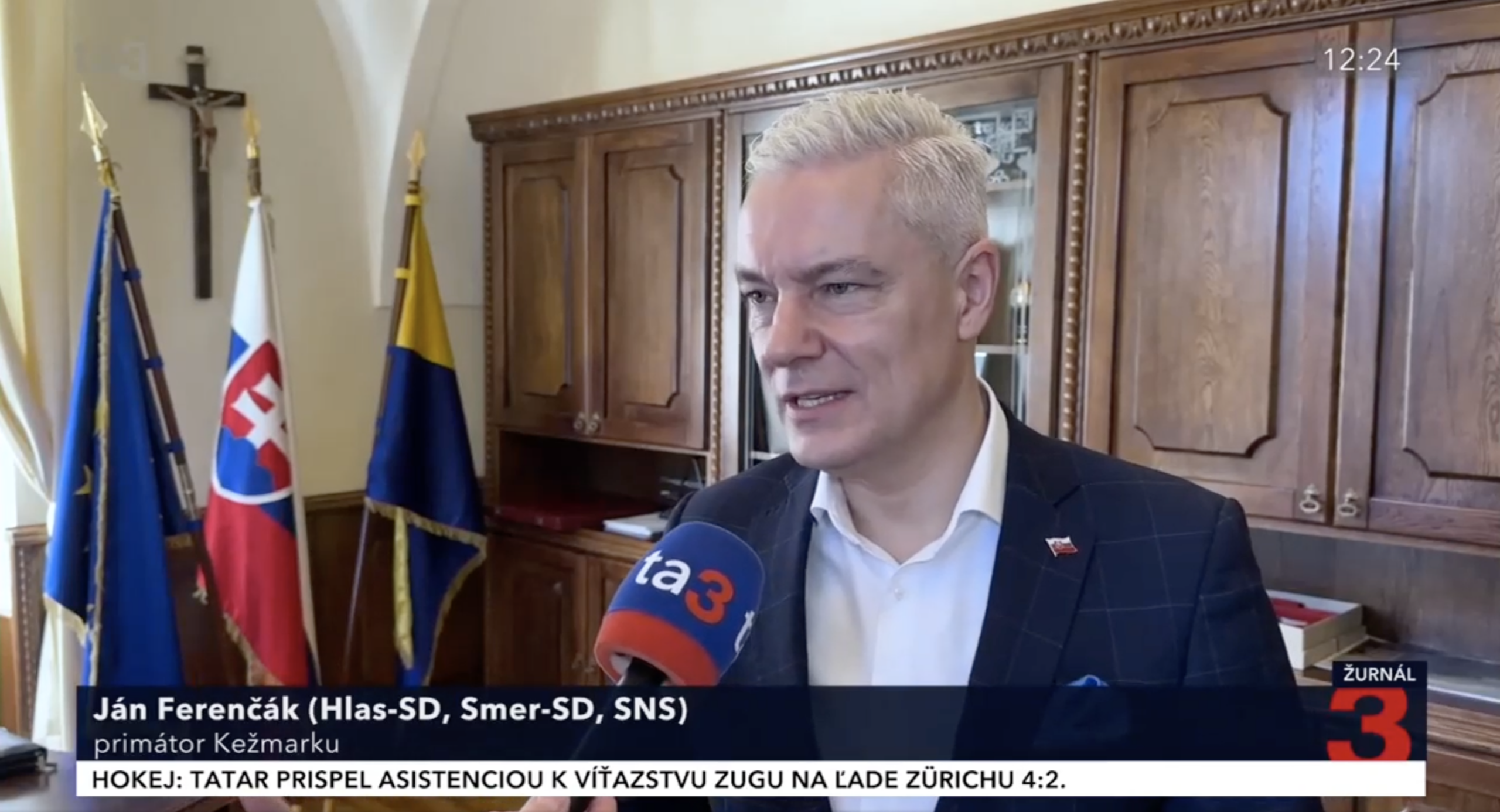
“These people are not actually alive, yet the state still lists them as living. They exist and do not exist at the same time. And this is not just about Kežmarok, it is about all of Slovakia. Our data simply is not in order,” warns Ján Ferenčák, Mayor of Kežmarok. Experts say this is not an isolated, amusing example. “There are far more serious discrepancies in municipal data,” cautions Igor Wzoš, an expert from the Slovak Smart City Cluster.
Experts agree that data is to modern society what oil was to the last century. “The twentieth century was the century of oil, the twenty-first is the century of data. Data is the oil of the future, and anyone who knows how to work with it stands to gain a great deal,” says Igor Wzoš.
A helping hand is being offered to local authorities by the international STICS project, run under the auspices of universities. Three entities are involved in the pilot phase: the municipality of Horné Srnie, the town of Kežmarok and the Banská Bystrica Self-Governing Region. The aim is to create a single methodology for all local authorities and for the state, which urgently needs accurate data for its key decisions.